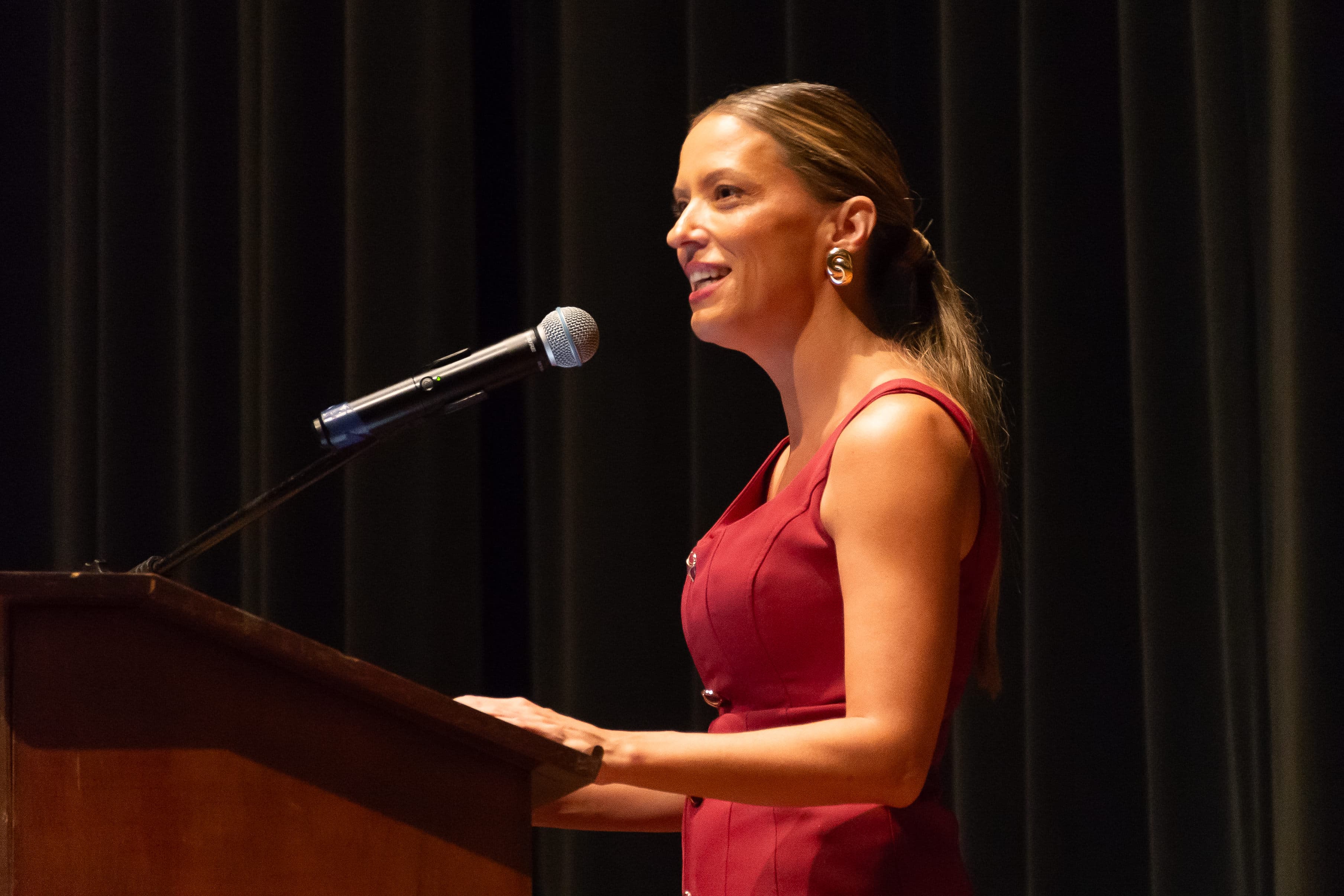
Rosana Pinheiro-Machado
The Authoritariat: An Interview with Rosana Pinheiro-Machado on Work, Subjectivity and the Far-Right
InterviewAcross the Global South, platform work is transforming the labour market and the political imagination of the working class. In this interview, anthropologist Rosana Pinheiro-Machado discusses her concept of the "authoritariat" — segments of the platformised working class drawn to reactionary populism through a mix of precarity, aspiration and the desire for autonomy. Drawing on long-term ethnographic research in Brazil, India and the Philippines, she examines how digital entrepreneurship, coach influencers and the collapse of collective identities are reshaping the political subjectivities of our time.
Rosana Pinheiro-Machado is a Brazilian anthropologist and Professor of Global Studies at the School of Geography, University College Dublin, where she directs the Digital Economy and Extreme Politics Lab (DeepLab), and the project "Flexible Work, Rigid Politics: The Nexus Between Labour Precariousness and Authoritarian Politics in the Global South (Brazil, India, and the Philippines.” She has studied working-class life, inequality, and political subjectivity in the Global South for over two decades. She is the editor of The Rise of the Radical Right in the Global South (2023) and author of Amanhã Vai Ser Maior ("Tomorrow Will Be Bigger", 2019) and Counterfeit Itineraries in the Global South (2017), among many other publications.
Q: What does platformisation bring that is genuinely new to working-class life — and does it amount to a rupture, or to the acceleration of existing dynamics?
The first thing platformisation brings is very practical: income and easy access to an occupation. Platforms offer quick gigs and an easy way for income generation to millions of people in the Global South. More importantly, there is a perceived autonomy when people work for themselves. They can choose when to stop, take a nap, go to a party, or take days off. When you have to work 12 or 15 hours a day in highly exploitative jobs, this becomes some type of liberation.
There is also the possibility of not being bossed. This is not merely neoliberal subjectivity but something profoundly autonomist. Especially in societies marked by subalternity, colonisation, and a history of slavery, being bossed means humiliation — a humiliation that is not only a relic of the past.
As to whether this constitutes a rupture, we witness a profound change in working-class subjectivities today. However, I don't see it as a rupture yet, because we are amidst this process. Platformisation is only one dimension of the neoliberal transformation and flexibilisation of work.
My interlocutors' daily life remains largely the same in terms of grievances and the desire for comfort. They are not chasing big dreams but a dignified life with minimal comfort. On the ground, the problems that the platformised working class have are very similar to those who are not platformed.
What we do see is a profound shift from a collectivist working-class subjectivity to a feeling structure characterised by desires for autonomy and new aspirations, which is unfortunately more individualistic. Whether this amounts to a rupture, we cannot evaluate now — in 20 years, we may see what revolutionary change it provoked. Our responsibility as scholars is to study this transformation of labour and subjectivity.
This shift is not provoked by platformisation alone. In Brazil, the rise of evangelical churches has been really important, and in Argentina, the financialisation of the poor. Neoliberal discourses are everywhere in emerging economies.
Yet, with platformisation, we have an acceleration and amplification — a catalyst for decentralisation, hyper-individualism, and the desire for autonomy.
We are in the eye of the hurricane now. A decent job still means formal employment for the majority in the Global South, though there are signs the curve is changing in Brazil and India. In my view, the rupture will come when formal employment is no longer the dream of the many — when the package of rights tied to it is fully destroyed after three decades of corrosion, and labour flexibilisation is complete.
Q: Your concept of the "authoritariat" describes a platformised working class in the Global South inclined toward illiberalism. How does it depart from Marx's lumpenproletariat and Standing's precariat, and what makes far-right populism so appealing to this class?
The "authoritariat" draws from Marx and Standing but also diverts from them. Contradiction is what defines this new class and sets my perspective apart. Marx argued that the "lumpenproletariat," occupied with flexible self-employment, was inclined towards reactionary ideas, identified with the upper classes, and betrayed working-class identity — prompting his contemptuous use of terms like "rabble".
Standing's "precariat" is inspired by Hobsbawm's "primitive rebels" and recognises an ambivalent class position. Yet he treats the precariat as a single block that could turn either right or left. I disagree with this generalising view. Today, these groups are being captured and seduced by the far right, yet they occupy a space of contradiction and ambivalence. Basically, my work diverges from both perspectives in two major ways.
First is the focus on the Global South. Through a Marxist lens, "flexible self-employed" describes the majority of the population in India, Brazil, and the Philippines — countries without the traditional working-class culture of Germany or the UK. I'm dealing with the majority of the world, where the majority is informal. Second, I don't project my political hopes onto this class as much as the literature does. Left-wing and liberal scholars have a history of imposing expectations on how people should have class consciousness. The meta-narratives they use erase differences and obscure the ambiguity.
My approach is about recognising the ambivalence of this new class beyond an essentialist political nature, as I explored in the paper "The Ambiguous Revolts." They lean towards the right, but they are diverse. They don't necessarily reject working-class identity when desiring to see themselves as autonomous: precarity remains a lived condition, yet the same person who suffers it will also say, "I'm not a worker, I'm an entrepreneur."
My anthropological work shows tendencies towards illiberalism for reasons Marx anticipated, but also for new reasons linked to technology, social media, and aspirational mechanisms for autonomy. Several converging forces push people towards the far-right: flexible work, new technologies, and the absence of unions or other collectives capable of addressing their grievances. The problem is that scholars project their political desires onto their analyses, rather than acknowledging the contradiction itself.
Authoritarian populists invest heavily in narratives of merit, hard work, and individualised positivity as the world of work is collapsing. They capitalise on the workers' desire for autonomy. The message is: "You are a hard worker; you have value; you are not the problem, the migrants are the problem." A hyper-competitive society and social media accelerate these discourses. They also address anxieties around gender, masculinity, social order, and safety, which matter deeply to vulnerable populations facing this massive transformation.
Q: Many low-income aspiring entrepreneurs in Brazil describe themselves as "CEO" on Instagram. What does this label reveal about the desires and political subjectivity of the new working class?
I discuss these issues in our recent work on the “CEO Myth”. We dealt with a database of 2 million aspiring entrepreneurs on Instagram and found "CEO" among the top 10 bio labels — and we are talking about low-income groups. They chose the most powerful word in the corporate world to describe themselves.
They are no longer workers; they are the CEOs of their lives and businesses.
This is a standard mode of self-presentation on social media, exceptionally promoted in our case by coach influencers. Social media offers a fancy facade whereby people can reinvent themselves, at least at the surface level, because the working-class identity is always there.
In Brazil or India, society defines the poor as dirty, criminal, or outcast. In Brazil, we have the word vagabundo, roughly an outcast criminal; in India, the caste system marks them as untouchables. If society views them in such derogatory terms, why can't they choose the best label and call themselves CEO? This is legitimate, even positive — an act of self-determination: "I don't want to be defined as untouchable or vagabundo; I want to be seen as CEO."
With the CEO label, they are re-humanising themselves, yet from an individualistic perspective. This individualism and rejection of a collective identity are worrying. The CEO label represents a logic of money, power, and bossing other people — a delusional coping mechanism promoted by influencers.
Ethnography reveals a more nuanced picture. There is what I call the "Elon Musk paradigm," where everybody wants to be a CEO, rich and powerful. But many people simply seek a dignifying self-definition or follow the trends. Sometimes they just want to show off to their family. When I asked one of my interlocutors, a street vendor running her business on Instagram, why she does it, she told me: "Because it's fancy, it's chic." It is not only about power and money — there is something more. To unpack these contradictions, we need to focus on people's perspectives and lived experiences.
Q: How global is the convergence between authoritarianism and platformisation? Do Global South dynamics find parallels in the North?
Some scholars talk about the “Brazilianisation” or “Southernisation” of the Global North. I disagree: the structural asymmetries of the world-system protect Northern labour standards in ways that will not simply dissolve.
Indeed, the transformations in the Global South are prefigurative of what is happening in the North, especially precarisation. Precarity is integral to our experience in the South, where 50 to 80 per cent of the population works in the informal economy. The South offers a guide to the impact of precarisation on authoritarianism and social violence. The North is moving towards precarisation, but full employment and working-class cultures remain strong there. Precarious platform jobs like Uber driving are taken much more by immigrants than by native populations.
Recently, I joined an online course with a British coach as part of my fieldwork on digital marketing and getting rich with AI. There were thousands from all around the Globe, but mainly based in the US and the UK. Their profiles revealed they were almost all immigrants or racialised people. So we don't see a white working class in decline entering precarious platformised employment — these are mainly first or second-generation immigrants.
Platformisation is a global phenomenon, but the contours of authoritarian convergence differ.
In Brazil, coaches and motivational figures are openly far-right. In the US and the UK, the discourse is more subtle: "Trump went crazy, he's investing trillions in AI, it is your opportunity to be rich."
During that AI marketing course, the coach asked: "Do you want to be part of the 1% of the world?" Everybody began to type 1% in the chat, creating an effervescent collective moment. Fifteen years ago, the Occupy slogan was "We are the 99%." Now we see a working class saying, "I am the 1%."
This signals the profound transformation in the subjectivity of large sections of the working class. The convergence is global, but mainly involves marginalised populations — including the Global South within the Global North.
Q: Evangelical and motivational influencers are central to Brazil's digital entrepreneurship ecosystem. Do you find similar dynamics in India and the Philippines?
Brazil is exceptional regarding the centrality of coach influencers for digital businesses, who are so clearly aligned with the far-right. It merges the neoliberal field of digital marketing with far-right libertarianism and conservatism.
In other countries, this articulation is subtle yet present. Trump and Elon Musk are presented as role models. The "manosphere" is a global libertarian-conservative current in which getting rich becomes the ultimate goal, tied to the ideal male role as provider.
In India and the Philippines, influencers also produce motivational content for self-employment, tending to promote far-right values even when not openly far-right. In India, they align with Modi's neoliberal principles — the entrepreneurial nation built through IT-sector expansion and AI-driven development. In the Philippines, they invoke freedom and autonomy, yet their narratives back securitarian agendas that construct social enemies in the name of fighting crime.
Motivational influencers promote an individualistic, self-enterprising mindset; what they offer, ultimately, is making money in a hyper-competitive society. It is about neoliberalism, libertarianism, conservatism, and reactionary gender ideals. Eventually, all this spirituality and self-growth serve individualism, which leads to illiberalism and conservatism.
Q: You challenge the idea that the working class votes for the far-right because of misinformation, arguing instead that legitimate emotions and the desire for recognition are at play. How does this reframe our understanding of authoritarianism's appeal?
Disinformation is the common-sense explanation for the rise of the far-right. But fascism spread in 1930s Europe without social media — we should move beyond simplistic causal frameworks. While institutions invest billions in combating disinformation, we risk overlooking the most fundamental unit of analysis: human beings and their lived social realities.
The false-information explanation has two key problems. First, it reduces people to passive subjects of manipulation. To insist on misinformation is to call people stupid and ignorant. People are not passive recipients of manipulation; they have legitimate grievances and articulate desires that the far-right addresses, even if cynically. We need to understand how people perceive and respond to inequality and relative deprivation.
Second, the business interests and design behind the platforms should be factored in. This design is inherently reactionary, privileging competition, visibility, and individualism. Social media lets people articulate desires and grievances and brings like-minded people together in ways that reinforce prejudices.
Q: What is the role of public ethnography in understanding the conjunction of platformisation and authoritarianism? What sorts of strategies can we use to counteract this process?
Billions are invested in researching how platform algorithms spread rage. But anger against the state and anti-establishment sentiments predate the platforms — I saw this when doing ethnography in Porto Alegre and Buenos Aires years ago. Social media observes these feelings and sends them back to people.
Public ethnography keeps our focus on structural oppression stemming from patriarchy, capitalism, and racism. Big tech business models generate hyper-individualism, and algorithms spread hate. We need a structural and grounded approach to recover the unity to fight authoritarian populists.
Public ethnography is about bringing people's voices back to the debate. It restores nuance and humanity to a debate gone abstract, detached from actual suffering and lived experience. We need to understand how rage and dreams are produced and how deprivation is perceived. Public ethnography guides us through the contradictions.
Beyond research, our work can foster programs that incentivise democratic and collective entrepreneurship. For instance, we collaborate with activists and policymakers to develop a coaching model that promotes collective entrepreneurship.
Influencing policy is also important. When discussing platform labour, everybody thinks of delivery riders and Uber drivers. But platform labour and digital entrepreneurship are far bigger phenomena, encompassing forms of work that many of us are already doing.
Anthropology's role is to bring to light what is hidden: the realities on the ground are more complex, layered, and contradictory.
To counter the devastating effects of platformisation, we need to show how individualism, social media, competition, and conservatism interlock and must be addressed together for effective democratic policy-making. Because when you dismantle work as a collective value, you dismantle democracy.
At the same time, we must be realistic about what we can accomplish: working with what we have, disputing what can be disputed, and finding our place in this struggle. We require both local and transnational strategies. Working with new transnational unions or worker associations is equally important.
Authors
Ülker Sözen
Ülker Sözen received her PhD in Sociology from Mimar Sinan Fine Arts University in Turkey in 2017.
Gustavo Robles
Gustavo Robles researches the subjective dimensions of neoliberal governmentality, the political economy of digital capitalism, and the intersections between authoritarianism, democracy, and platformization.