Logo of IRGAC

Theory & Research

See all
  • Global
  • Counter-Strategies
  • Fascism
  • Subjectivity & Ideology
  • Media

The Lost Innocence of Playing: Why games are becoming the new cultural battlefield between the far right and its opponents

Theory & ResearchVideo games are often dismissed as entertainment, yet they have become a crucial arena where politics, technology, and the far right intersect. From GamerGate and Steve Bannon’s mobilisation of gaming communities to the gamification of online politics, game cultures have profoundly shaped today’s social media dynamics and reactionary movements. Enrico De Angelis explores in this article why games deserve far more attention and political and cultural significance, not only as the world’s largest entertainment industry.
By Enrico De Angelis
The Lost Innocence of Playing: Why games are becoming the new cultural battlefield between the far right and its opponents
  • Europe
  • Academia
  • Neoliberalism
  • Fascism

Workshop Report: From "(Post)neoliberal Fascization" to "From the Picket Line" — Conversations on the (Post)neoliberal University

Theory & ResearchFascisms have a material existence: they reshape spaces and cities, inscribe themselves on bodies and relationships, and circulate through images and imaginaries. What does this mean for universities?
By IRGAC and Gustavo Robles
Mapping authoritarian inscriptions and resistances at UCL's campus
  • Global
  • Fascism
  • Economy
  • Labor Struggles
  • Subjectivity & Ideology

Road to Fascization: Crisis of Social Cohesion, Alienation, and the Search for Alternatives

Theory & Research The current crisis is creating political conditions in which states are losing their ability to manage internal societal contradictions. The consequences of the crisis of neoliberalism, which has severed social bonds, have evolved into a broader crisis that is causing modern societies to lose their social cohesion, and their ability to politically organise to find adequate responses to the crisis itself.
By Ali Yalçın Göymen
Road to Fascization: Crisis of Social Cohesion, Alienation, and the Search for Alternatives

In Perspective

See all
  • Latin America
  • Antifeminism & LGBTIQ
  • Global South
  • Subjectivity & Ideology

A Laboratory for Queer Anti-Fascism: Lessons from Argentina Under Milei

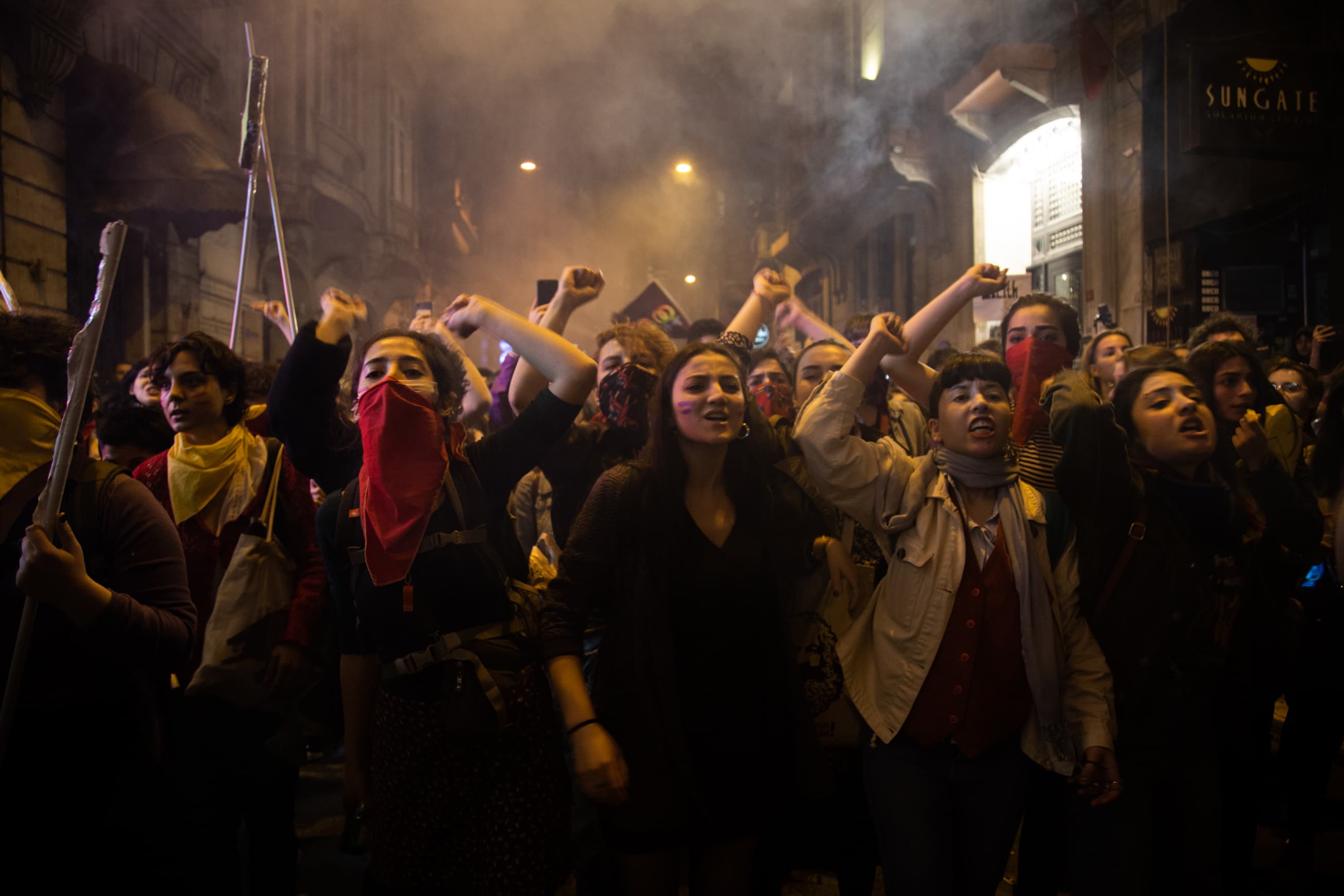
In PerspectiveIn February 2025 the LGTBIQ+ movement organized a massive demonstration in Argentina, against the libertarian government, the president’s homophobic remarks at Davos and his permanent hate speech. It was the first Anti-fascist, Anti-racist, LGBTIQ+ demonstration and it was huge because it managed to mobilize sectors that had rarely mobilized in protest against Milei. In this article we want to analyse what happened that this particular event was able to articulate so many different groups. But also, we propose an explanation for why that movement weakened, giving way to a small demonstration one year later, and how we might regain strength again. 
By Gabriela Mitidieri
A Laboratory for Queer Anti-Fascism: Lessons from Argentina Under Milei
  • Latin America
  • Global South
  • Elections
  • Populism
  • Subjectivity & Ideology

New generations and (not so) new authoritarianism in Bolivia

In PerspectiveThe rise of right-wing discourses in Latin America presents itself as a promise of change, appealing to meritocracy, pragmatism, and economic recovery. Yet behind this language of renewal lies a familiar political logic. In a context of crisis, uncertainty, and generational weariness, these narratives recycle conservative and authoritarian measures while positioning themselves as “real solutions,” gaining particular traction among young people who navigate vulnerability, disillusionment, and the search for stability.
By Claudia Cuellar
New generations and (not so) new authoritarianism in Bolivia
  • Global
  • Neoliberalism
  • Antifeminism & LGBTIQ
  • Subjectivity & Ideology

SELF-HELP’S AUTHORITARIAN EDGE

In PerspectiveThe explosive growth of social media self-help culture promises quick solutions to intimate crises, from restoring “feminine energy” to reclaiming “masculine power.” Yet beneath its language of empowerment lies a deeper political logic. As neoliberal societies produce a growing “care deficit,” self-help influencers transform insecurity into a market while promoting survivalist individualism, gender essentialism, and authoritarian fantasies of control that increasingly echo the moral agendas of contemporary far-right politics.
By Ülker Sözen
SELF-HELP’S AUTHORITARIAN EDGE

Interview

See all
  • WANA
  • Subjectivity & Ideology
  • War & Violence
  • Antifeminism & LGBTIQ

Iranian Feminism, Between War and the Regime

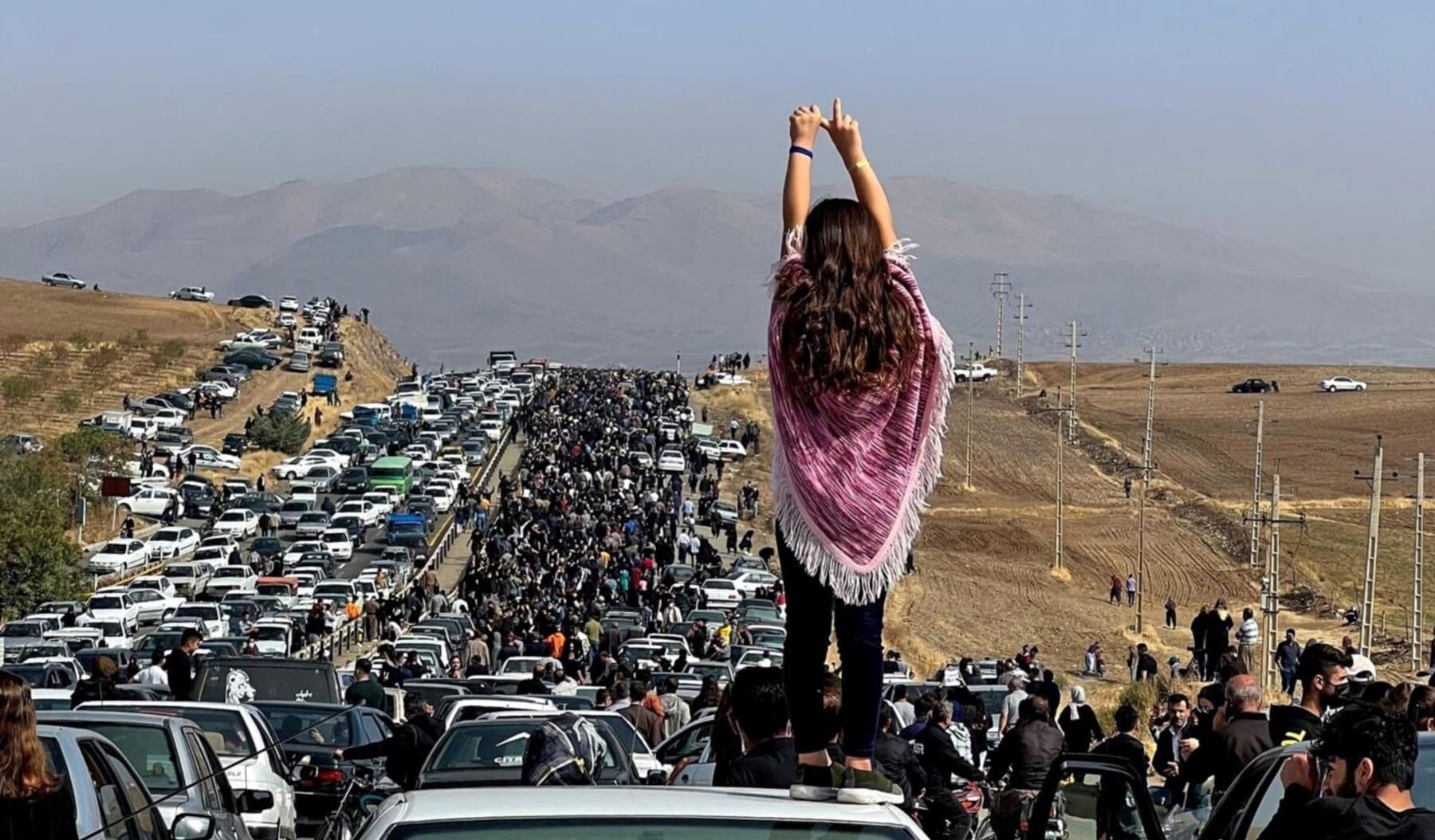
InterviewNearly four years after the killing of Mahsa Jina Amini triggered one of the largest uprisings in Iran since the establishment of the Islamic Republic, the political landscape has changed dramatically. State repression dismantled activist networks, imprisoned militants, and forced many activists into exile, while the military offensive carried out by Israel and the United States reshaped the political terrain. In this interview, Firoozeh Farvardin reflects on the place of feminism in a context marked by internal repression, war, and struggles over who speaks for the Iranian opposition.
By Carmín Rios Fukelman and Miranda Hochman
Iranian Feminism, Between War and the Regime
  • Global
  • Global South
  • War & Violence
  • Neoliberalism

With and Beyond the West: Multipolarity, War Regimes and Global Struggles – An Interview with Sandro Mezzadra and Brett Neilson

InterviewIn their book "The Rest and the West: Capital and Power in a Multipolar World", political theorists Brett Neilson and Sandro Mezzadra offer a sweeping analysis of contemporary capitalism's shifting political geographies. As war and militarisation proliferate — from Ukraine to Gaza, Lebanon, Iran, Israel, and Venezuela — their framework offers a rare and timely lens for understanding the entanglement of capital, geopolitics, and violence.
By Sowmya Maheswaran
With and Beyond the West: Multipolarity, War Regimes and Global Struggles – An Interview with Sandro Mezzadra and Brett Neilson
  • Global South
  • Subjectivity & Ideology
  • Neoliberalism
  • Times Of Collapse

The Authoritariat: An Interview with Rosana Pinheiro-Machado on Work, Subjectivity and the Far-Right

InterviewAcross the Global South, platform work is transforming the labour market and the political imagination of the working class. In this interview, anthropologist Rosana Pinheiro-Machado discusses her concept of the "authoritariat" — segments of the platformised working class drawn to reactionary populism through a mix of precarity, aspiration and the desire for autonomy. Drawing on long-term ethnographic research in Brazil, India and the Philippines, she examines how digital entrepreneurship, coach influencers and the collapse of collective identities are reshaping the political subjectivities of our time.
By Ülker Sözen and Gustavo Robles
The Authoritariat: An Interview with Rosana Pinheiro-Machado on Work, Subjectivity and the Far-Right

Review

See all
  • Global
  • Antifeminism & LGBTIQ
  • Subjectivity & Ideology

Gender Wars. Or How the Right Takes Control Over the Future

ReviewIn her new book Gender Wars: The Sexual Politics of the Radical Right, feminist journalist Nuria Alabao brilliantly analyzes the conservative attack on bodily autonomy and childhood in the name of security.
By Paülah Nurit Shabel
Gender Wars. Or How the Right Takes Control Over the Future
  • Latin America
  • Subjectivity & Ideology
  • Neoliberalism

Condominium Logic and the Rise of the Far Right: Historicism of Fear, Ressentiment, and Affect in Brazilian Politics

ReviewBook review: Lacan e a Democracia: clínica e crítica em tempos sombrios (Lacan and Democracy: Clinic and Critique in Dark Times) by Christian Dunker
By Paula Gil Larruscahim
Condominium Logic and the Rise of the Far Right: Historicism of Fear, Ressentiment, and Affect in Brazilian Politics
  • Latin America

We Want Ourselves Alive and Debt-Free [Or a Manifesto on Financial Disobedience]

Review¿Quién le debe a quién?, a book from Tinta Limón which was edited in 2021 by Silvia Federici, Verónica Gago, and Lucía Cavallero
By Ailynn Torres Santana
We Want Ourselves Alive and Debt-Free                                                [Or a Manifesto on Financial Disobedience]